 Himeji Castle Ticket
How to Get to Himeji Castle from Osaka, Kyoto, Kobe and Tokyo
How to get to Himeji Castle is the easiest logistics question in Kansai: a shinkansen station whose exit frames the keep 1.2 km down a straight boulevard. Himeji is the easiest great castle in Japan to reach: a shinkansen station whose exit frames the keep 1.2 km down a straight boulevard. This guide covers every rail approach with the times and fares that matter, the station-to-gate walk, and how a tour's meeting point should change your plan. For what to do once you arrive, start at the ticket comparison; this page is the railway manual.
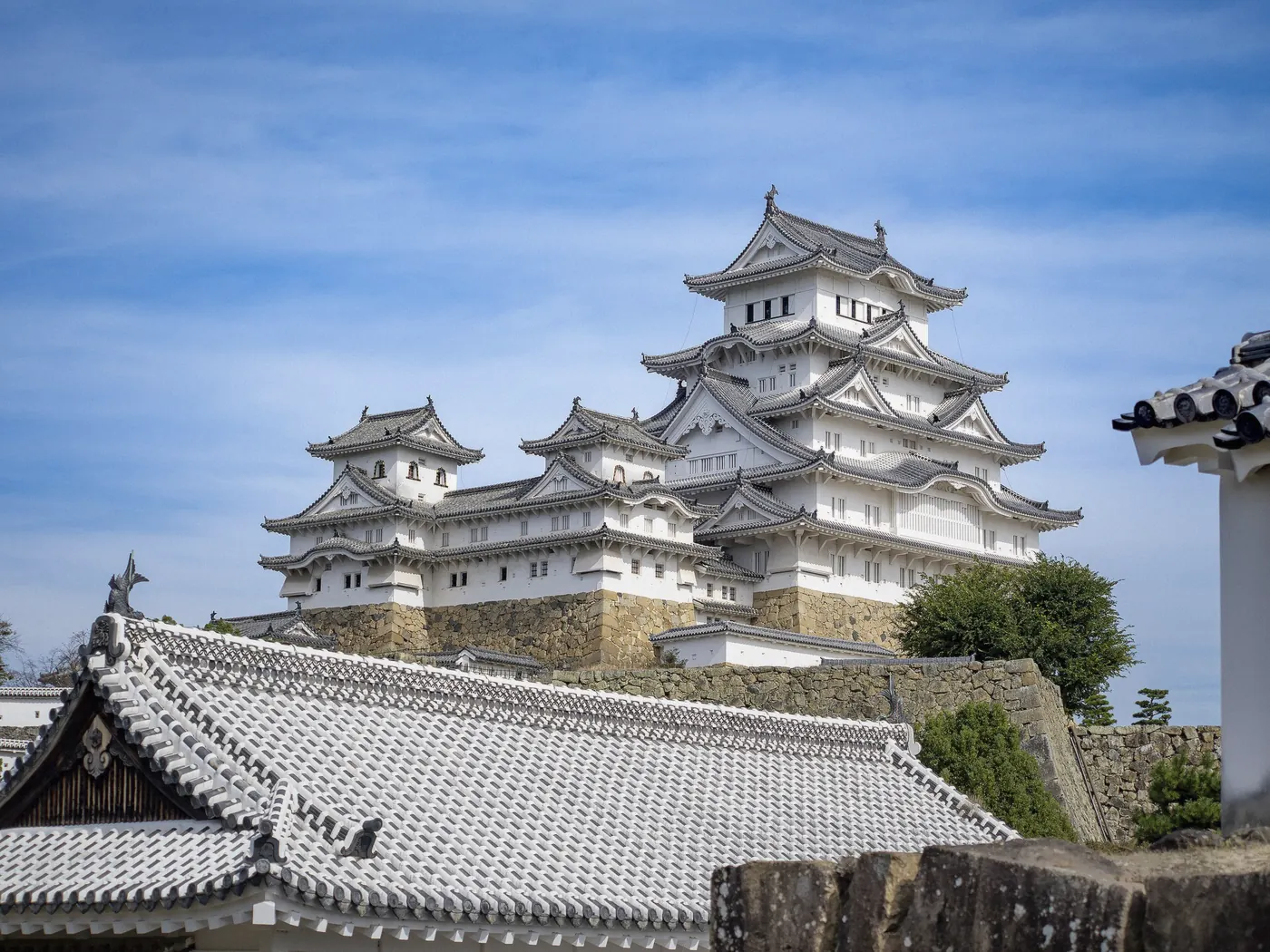
The keep is visible from the train on approach - the castle announces itself early. Photo: Yasuo Hamashima, CC BY-SA 4.0, via Wikimedia Commons.
Quick answer 30 minutes from Osaka, 45 from Kyoto, one straight walk from the platform
Key takeaways
- Shinkansen: Shin-Osaka to Himeji about 30 minutes, Kyoto about 45 - the fastest and, with a rail pass, effectively free option.
- No shinkansen pass? The JR Special Rapid from Osaka station takes about 65 minutes for about 1,530 yen - the budget default - and about 40 minutes from Kobe's Sannomiya.
- Himeji Station's north exit puts the keep dead ahead: a flat 15-20 minute walk down Otemon-dori, or the loop bus to Otemon-mae. Gate-meeting tours start at the gate, so time your train to the tour, not the reverse.
From Osaka
Two trains, one decision
The shinkansen from Shin-Osaka covers the 85 km west in about 30 minutes for around 3,220 yen unreserved - Hikari and Sakura services run roughly every 15 minutes through the morning, and no reservation is needed on the Hikari that dominates this segment. The alternative is the JR Kobe Line Special Rapid (shinkaisoku) from Osaka station: about 65 minutes and about 1,530 yen, running twice an hour, seated, and covered fully by the Japan Rail Pass without a seat fee. The shinkansen wins on time; the special rapid wins on price-per-comfort and on departing from Osaka station proper rather than Shin-Osaka.
Where tours meet the arithmetic
Himeji-based listings in our comparison meeting at the station or the bridge assume you arrive by the morning shinkansen; the three-city bus loop departs from Umeda in central Osaka and removes the train question entirely - at the cost of sharing its eleven hours with Kobe and Nara.
From Kyoto
The 45-minute line
Direct Hikari and Sakura services run Kyoto to Himeji in about 45 minutes for around 5,590 yen unreserved - roughly two departures an hour through the day. This is the longest of the three Kansai shinkansen hops, and the one where a reserved seat earns its small fee in sakura season. The right-hand windows (sea side, seats D/E) catch the keep on approach.
Special-rapid alternatives exist but involve a change at Osaka and over 90 minutes total; the shinkansen is the sane Kyoto default. The bullet-train tour exists for travellers who want this exact ride bundled with a licensed guide and both admissions.
From Kobe
The shortest hop
From Sannomiya, the Special Rapid reaches Himeji in about 40 minutes for about 990 yen; the shinkansen from Shin-Kobe does it in about 15 for about 1,890 yen. Kobe-based visitors are the comparison's natural morning-trippers: the 9:00 castle opening is reachable on the 8:10 rapid with coffee in hand, and the return puts you back for a harbour lunch. The castle-and-Kobe port day trip shape - castle first, harbour after - runs the line in reverse.
From Tokyo
Doable, and better as a Kansai day
Direct Nozomi services run Tokyo to Himeji in about 3 hours 40 minutes (around 19,000 yen) - a real one-day shape, arriving before noon, but a long shuttle for a single sight. The practical Tokyo pattern folds Himeji into a Kansai stay: shinkansen to Shin-Osaka or Kyoto (2h15-2h30), base there, and Himeji becomes the 30-45 minute day trip the rest of this site prices. If Himeji must be a Tokyo day trip, take the 7:00-8:00 Nozomi wave, and treat the one-day itinerary as the return-train bible.
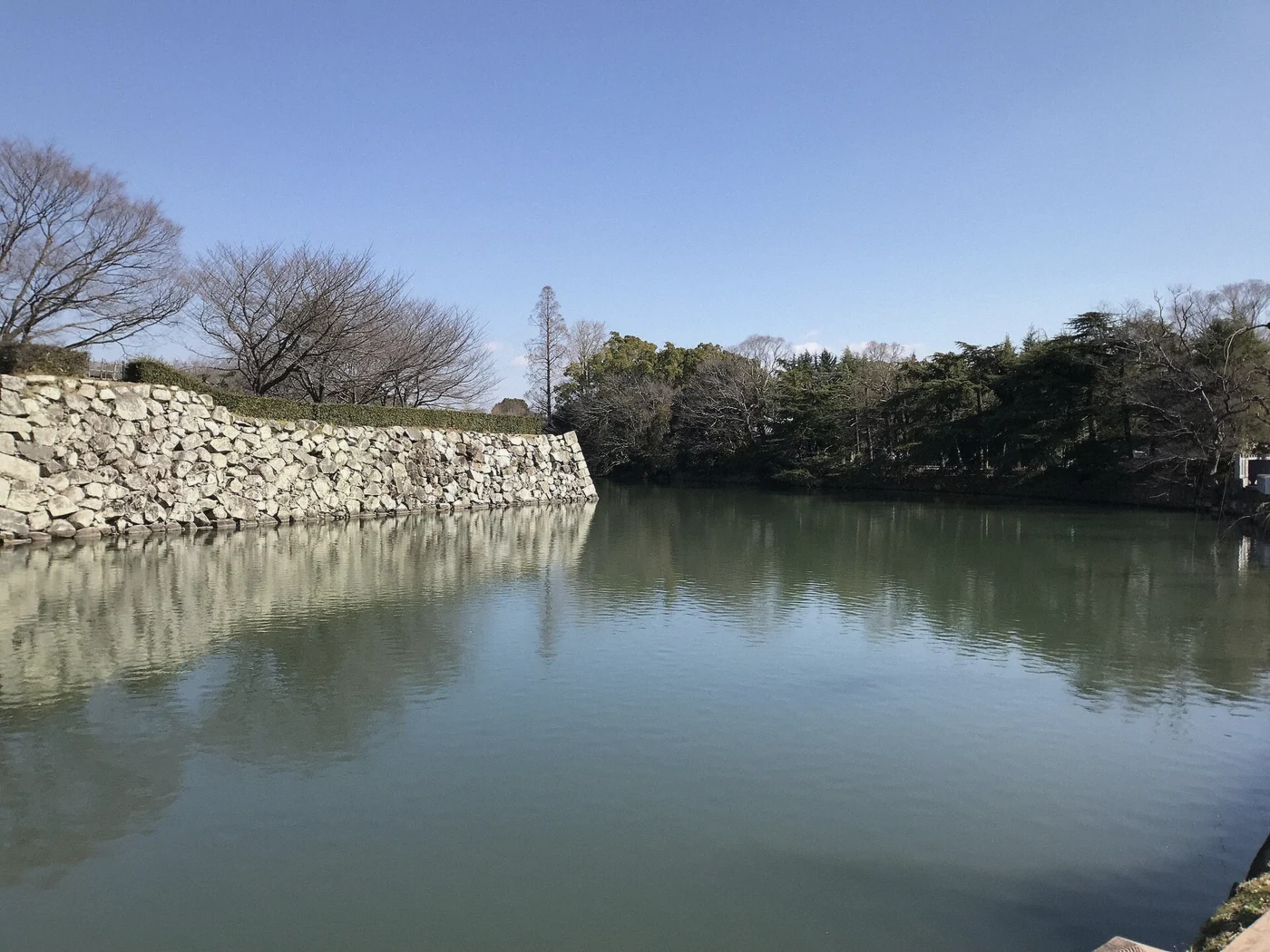
Sakuramon Bridge - the meeting point for several listings - sits on the walk from the station. Photo: そらみみ, CC BY-SA 4.0, via Wikimedia Commons.
Station to Castle: the Walk and the Bus
The 1.2 km boulevard
Exit the station's north (castle) side and the keep is framed dead ahead down Otemon-dori - a flat, covered-in-parts 15-20 minute walk past the clock tower and the merchant facades. The Loople loop bus and the Shinki bus to Otemon-mae cover the same ground in minutes for a fare, useful on rain days or for knees preserving themselves for the keep's 100+ steps. Himeji's city bike share (Himechari) is the third option, docked near the station.
Walking it once, in the morning light, with the keep growing ahead - that is the arrival this castle was designed to stage.
Meeting points, translated into train times
The gate-meet listings start their clock inside the castle's front door, so a late train cannot be absorbed by a slow stroll - plan the arrival one service earlier than feels necessary in peak season.
| Your listing meets at | Arrive via | Buffer |
|---|---|---|
| Himeji Station (north exit) | Any train; meet inside the concourse | 10 min before start |
| Sakuramon-bashi Bridge / Otemon Gate | Walk the boulevard (15-20 min) from any arrival | 10 min + the walk |
| Tourist Information office | Station-adjacent; 3-5 min from the north exit | 10 min before start |
| Your hotel in Kyoto/Osaka | No train needed - pickup tours | As confirmed |
Which Ticket to Buy for the Trains
Pass math and the IC-card default
Japan Rail Pass holders ride both the shinkansen (Hikari/Sakura, reserved seats free with a booking at any JR office) and the special rapid at no extra cost - Himeji is one of the pass's best day trips. Without a pass: IC cards (ICOCA, Suica) cover the special rapid tap-in/tap-out, while shinkansen tickets are bought at machines or online; unreserved seats are the default for this short segment. One warning from the platform's own listings: several Himeji tours' meeting points sit at the gate, not the station - a rail pass does not buy you lateness.
Arriving by Car and Parking
The exception that proves the rail rule
Expressways reach Himeji in about 15 minutes from the nearest interchanges, and paid lots ring the castle quarter (Sakuramon-dori underground lot among the closest, filling by 10:00 in sakura). But driving buys little: the castle quarter is pedestrian-scale, the rail approaches are faster and calmer, and guided tours start on foot. The car earns its place only in combination - the western Harima coast, Mt Shosha's ropeway - never for the castle alone.
Video-verify your parking plan the night before; event days reassign the lots without warning.
The Whole Run in Motion
An independent video of the Osaka-to-Himeji day, from platform to keep - the route this page prices.
Luggage, Lockers and the Station Half-Hour
Storing the bags, feeding the morning
Himeji station's north concourse runs coin lockers in three sizes (a few hundred yen,_ic-card payable) plus a staffed baggage counter for the suitcase-scale cases - enough capacity on ordinary days, tight in bloom weeks by 10:00. The station's bakery counters and the ekisoba stand under the concourse cover breakfast and the departure bowl respectively; the tourist information office by the central exit holds the English maps the boulevard's signs assume you have. Travellers on gate-meeting tours should budget the locker queue into their ten-minute buffer - it is the one station task that grows on peak days.
The Loople, city buses and the bike share
The Loople loop bus circles station-castle-garden in minutes at a flat fare, with the Shinki 'Otemon-mae' bus as the direct alternative; both take IC cards. Himeji's city bike share, Himechari, docks by the station and near the castle - the flat 1.2 km is arguably the city's most pleasant cycle. On rain days or for knees, the buses convert the walk question entirely; for everyone else the boulevard remains the best arrival in Kansai.
Accessibility: Step-Free to the Gate
What the route honestly offers
The station, the boulevard, Otemon Gate and the outer baileys are step-free or ramp-served; the castle rents wheelchairs near the gate, and the loop bus kneels. The keep itself is not accessible - the staircase is the structure - and no tour listing in the comparison adapts for chairs, which their own fine print states. The honest accessible Himeji is therefore a grounds-and-garden day: the moat paths, the west bailey galleries, and Koko-en's flat circuits (its gravel is firm-packed), with the keep admired from the third bailey. Kobe's harbour and Himeji's station district complete a step-free day that still ends with the keep's silhouette in it.
A Tokyo Worked Timetable
The one-day-from-Tokyo shape, hour by hour
It works, and it is a lot of train for one castle - which is why the standard advice holds: fold Himeji into a Kansai base and it becomes the 30-45 minute day trip the rest of this site prices. But for the traveller with one free Tokyo day and a castle fixation, the timetable above is honest about both the possibility and the fare (about 19,000 yen each way, unreserved shinkansen seats scarce on the direct Nozomi).
| Time | Move | Note |
|---|---|---|
| 06:30 | Nozomi from Tokyo | Direct to Himeji, ~3h40; reserve seats - it is a long ride |
| 10:15 | Arrive, walk the boulevard | Locker drop, tourist-info map |
| 10:45 | Castle entry | Keep by 11:00; quieter than tour waves |
| 13:00 | Koko-en + ekisoba lunch | The garden's afternoon calm |
| 15:30 | Nozomi east, or Hikari via Shin-Osaka | Home by ~19:30 |
The Shinkansen Unreserved Question
When to bother reserving
The Sanyo shinkansen's Himeji segment runs Hikari and Sakura services at roughly quarter-hour frequencies through the working day, and non-reserved carriages absorb the ordinary Kansai flow without drama - turn up, tap in with the IC or buy the paper ticket, take a seat in cars 1-3 (Hikari) or the non-reserved cars (Sakura). Reserve when three things coincide: Friday and Sunday afternoons, sakura and foliage weeks, and groups of three or more who want to sit together - the reservation window opens a month out and costs nothing beyond the seat itself with a rail pass, a few hundred yen without. The one-day itinerary needs no reservation on ordinary days; the bloom guide insists on one for peak mornings.
Missed trains and the flexibility margin
Unreserved tickets ride any same-class train that day, which makes them the flexible traveller's instrument; reserved tickets can be changed once at any JR ticket machine or office before departure. Guided travellers hold neither problem - the operator's bookings carry the group - which is one more small way the bundled formats buy calm rather than speed.
Three Worked Arrivals: Business, Budget, Bloom
The same platform, three plans
The business traveller (Osaka, one night, suitcase): shinkansen from Shin-Osaka at 08:20, locker at the station, keep by 09:30, boulevard walk as the meeting-room-to-boardroom transition, 14:00 train back. The budget pair (Kyoto, students): special rapid with IC cards, breakfast from the station bakery, official online ticket already in the phone, ekisoba lunch, home before 17:00 fares. Bloom-week family: reserved shinkansen seats a month out, guided morning slot locked two months prior, Loople bus budgeted for tired legs, 16:00 light-up plan from the station square.
Three budgets, one infrastructure - the timetable spine holds for all of them.
Strike and disruption playbooks
Kansai rail disruption is rare and short - weather, not strikes, is the enemy - and the recovery hierarchy is worth knowing: shinkansen resumes first, special rapids follow, buses last. A suspended morning means the official ticket still works tomorrow (date-change terms) and guided listings' 24-hour windows absorb the rebook; a suspended afternoon means the keep was never happening at 16:00-last-entry pace anyway. The station's English announcement boards and the JR West app carry the live state; the taxi rank outside the north exit prices the rescue option honestly (a Kobe taxi hop is cheaper than an Osakan panic).
The Night-Before Checklist
Ten lines, ninety seconds
- Train time locked and the meeting point translated into a buffer.
- Ticket or tour confirmation screenshot - the QR lives in photos, not the cloud.
- Water bottle filled (summer) or gloves packed (winter) - the season's call.
- Shoe bag in the daypack - the keep's one recurring ask.
- Cash margin for the teahouse, tastings and the lockers.
- Battery above fifty percent - the QR, the map and the congestion indicator all drain it.
- Weather check against the hour plan, umbrella where voted.
- Loople bus fare option confirmed for the return legs.
- Lunch quarter chosen - the decision tree pre-answered.
- One spare morning held in reserve for a washout.
Why a checklist and not an app
Himeji's day is famously simple, which is exactly why it punishes the small omissions: a dead battery at the QR gate, a shoe bag bought at tourist prices, the 16:00 last entry discovered at 15:50. Ten lines cover every recurring failure the reviews describe, and the worked arrivals above show the checklist running in real itineraries.
Driving In: The One Case That Justifies a Car
When the car wins, and the route it takes
The castle day never needs a car, but the west-Harima day does: Mt Shosha's ropeway, the Seiban coastline and the rural temples sit beyond the rail grid's patience, and a rental from Himeji station's district desks covers them in an afternoon. The drive in from the Kansai core is honest about itself: the Sanyo expressway runs about an hour from Osaka's ring in clear traffic, parking clusters at the Sakuramon-dori underground lot and the Otemon-dori's edge lots, and bloom weeks fill all of it by 09:30. The rule this page has already printed holds at full strength: rail for the castle, car for the region - and never confuse the two on a flower-weekend morning.
The Return Journey's Three Traps
Where the day home actually goes wrong
Trap one: the 16:00-17:00 special rapid crush - commuters join the tour-group leftovers and unreserved seats vanish; shinkansen riders glide past it. Trap two: the 15:45 'one last garden look' that meets the castle's 16:00 last-entry traffic jam at Otemon - leave the quarter by 15:30 or plan to stay for the light-up. Trap three: the wrong station exit - Himeji's south side is the local-line and taxi side, and a weary traveller walking out of it adds ten confused minutes; the north (castle) exit is the way home as well as the way in.
The worked arrivals all end northbound; so should the return.
IC Cards, Tickets and the Tap-In Margins
The fare mechanics, exactly
An IC card (ICOCA, Suica and friends) covers the whole special-rapid route: tap in at Osaka, tap out at Himeji, about 1,530 yen silently deducted, seats first-come. The shinkansen stays a paper-or-app ticket world - machines at Shin-Osaka sell the unreserved fare in seconds, English menus included, and the rail-pass exchange offices handle the covered variants with a reservation. Two margins worth knowing: IC cards need a minimum balance (tap-in refuses below it, and the Himeji-side top-up machines take cash), and children's IC fares need a child card issued with ID - the family arithmetic runs on those small print items more often than on the headline fares.
One Last Margin: The 08:00 Rule
Why every good Himeji day starts before nine
Every worked arrival on this page lands its travellers at the castle before the first tour wave, and the reasons compound: the keep queue is kindest at opening, the boulevard's light is at its softest, the lockers are empty, and the first hour's photographs belong to whoever set the alarm. The 08:00 rule is not an早起 personality test - it is the single highest-yield logistics decision on this page, worth more than the train class you pick or the ticket route you book. Set it once, and the rest of this guide is downhill.
Getting to Himeji Castle: Frequently Asked Questions
How do I get from Osaka to Himeji Castle?
Shinkansen from Shin-Osaka in about 30 minutes (about 3,220 yen), or the JR Special Rapid from Osaka station in about 65 minutes for about 1,530 yen. Either way, exit Himeji station's north side and walk the 15-20 minute boulevard to the castle, or take the loop bus.
How long is the shinkansen from Kyoto to Himeji?
About 45 minutes on direct Hikari/Sakura services, around 5,590 yen unreserved, roughly two departures an hour. Seats D/E on the sea side catch the keep on approach.
Can you do Himeji Castle as a day trip from Tokyo?
Yes - direct Nozomi trains run it in about 3 hours 40 minutes - but it makes a long single-sight day. Most Tokyo travellers base in Osaka or Kyoto and take the short Kansai hop instead; our one-day itinerary shows the full shape.
How far is Himeji Station from the castle?
About 1.2 km - a flat 15-20 minute walk straight down Otemon-dori with the keep visible the whole way. The Loople loop bus and the Shinki bus to Otemon-mae cover it in a few minutes if the weather or your knees vote against the walk.
Is Himeji Castle worth the trip from Osaka or Kyoto?
For anyone who cares which Japanese castles are original: yes - it is the finest surviving keep in Japan and the country's first UNESCO World Heritage site, and the rail logistics are the easiest of any major castle. The comparison shows tours from $62 that bundle the admission the 2026 price change made dearer.