 Himeji Castle Ticket
A One-Day Himeji Itinerary (Castle First, Always)
A Himeji one day itinerary rewards the single focused day more than almost any Kansai sight: one castle, one garden, one old town, all walkable from the shinkansen platform. Himeji rewards the single focused day more than almost any Kansai sight: one castle, one garden, one old town, all walkable from the shinkansen platform. This itinerary builds the day hour by hour - castle first, garden second, sake district or Kobe third - with the rain and heat variants that keep it honest. If you would rather hand the logistics to a guide, the ticket-included options start at the same gate; this page is the independent version.
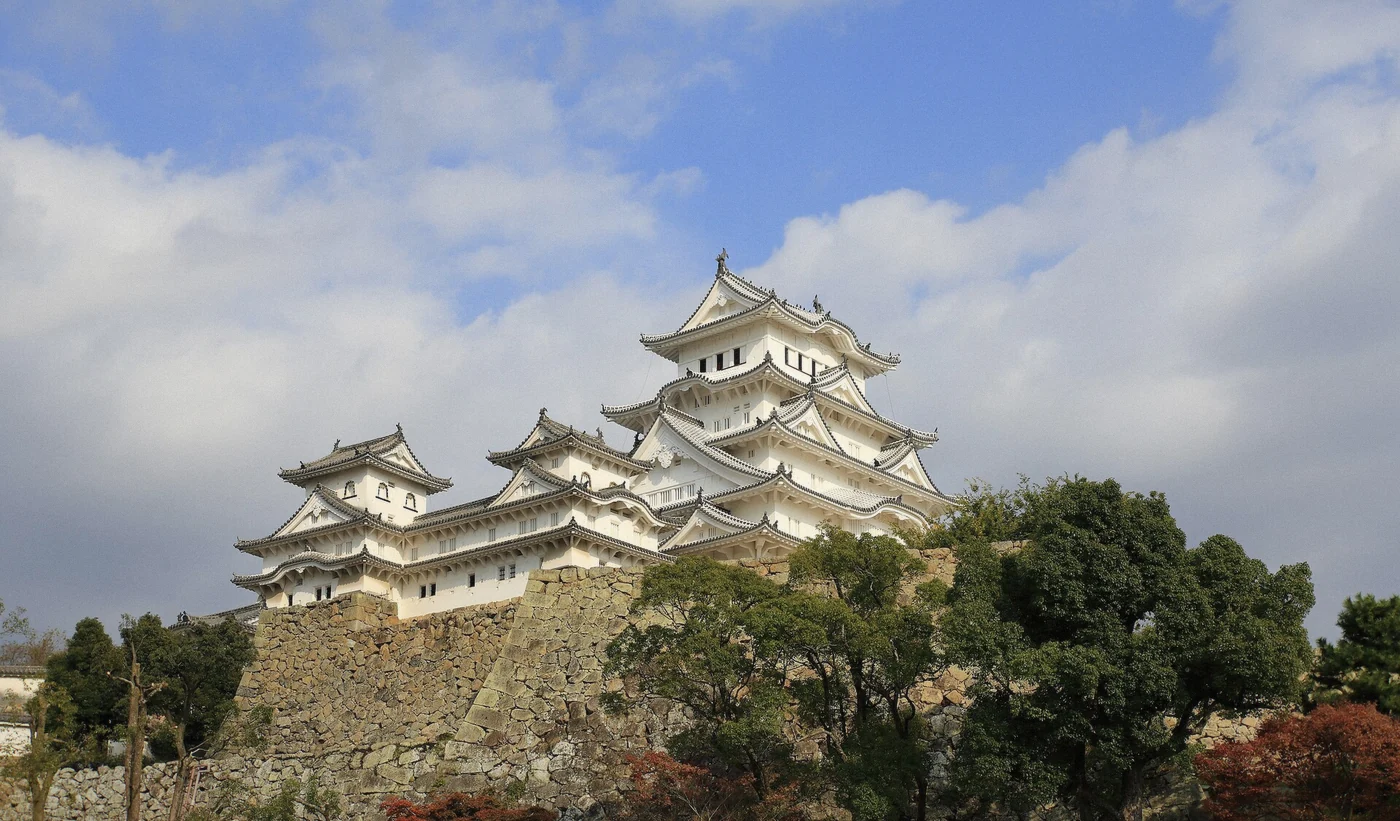
The keep from the third bailey - the day's centrepiece, best before 10:00. Photo: Martin Falbisoner, CC BY-SA 4.0, via Wikimedia Commons.
Quick answer Castle at 9:00, garden by noon, sake district or Kobe after - home by dinner
Key takeaways
- 08:00 train, 09:00 castle opening, 10:30 keep done before the queue peaks, Koko-en by noon, afternoon sake district or Kobe, home by 18:00-19:00.
- Budget 1.5-2 hours for the keep route and 45-60 for the garden - 3-3.5 hours on site total; last castle entry is 16:00 and the keep closes behind it.
- The variant decision is the afternoon: the sake lanes west of the castle (walkable, calm) or the shinkansen to Kobe's harbour (30 minutes) - both fold into the same return.
The Day at a Glance
The skeleton
Times read for an Osaka or Kyoto base in ordinary season. Bloom weeks shift everything earlier: enter at 9:00 means queue at 8:15, and the keep is done by 10:00 or not at all.
Is Himeji worth visiting for a whole day rather than a castle tick? The itinerary above is the argument: keep, garden, old town and a lunch worth the train fare rarely fit inside three hours, and none of them rewards rushing.
| Time | Move | Notes |
|---|---|---|
| 07:30-08:00 | Train to Himeji | Shinkansen 30 min from Shin-Osaka, 45 from Kyoto |
| 08:20 | Boulevard walk | Otemon-dori, keep dead ahead; lockers at the station |
| 09:00 | Castle opens - enter | Official ticket or tour meet; first wave is calmest |
| 09:15-10:45 | The keep | Baileys, shoe-off, six floors, rooftop views |
| 11:00-12:00 | Koko-en Garden | West moat walk, nine gardens, teahouse stop |
| 12:15-13:30 | Lunch, castle quarter | Otemon-dori or the sake district's edges |
| 13:30-16:00 | Sake district or Kobe | The day's variable - see the afternoon |
| 16:30-18:30 | Return train | Home for dinner in Osaka or Kyoto |
Morning: the Castle
The 90 minutes that justify the trip
Enter with the first wave and walk the route unhurried: Otemon Gate, the third bailey's gravel, the numbered gates climbing through mud-walled yards to the keep's entrance. Shoes off, into the shoe bag you brought, and up six floors of steep wooden stairs - princess chambers, the well of the Okiku legend, the shrine floor, then the rooftop panorama over the roofscape to the Harima Sea. Descend by the west stairs, and finish through the Nishi-no-Maru long galleries where the princess quarters overlook the garden you are about to visit.
Total: 1.5-2 hours at honest pace; photograph-adds will use it all.
Ticket mechanics, once
Buy the combo online the night before and you walk past the counter entirely; buy at the gate and you lose five-to-twenty-five minutes depending on the hour. Guided travellers instead report to their listing's meet - station, bridge or gate - and the operator holds the admission. In our comparison the castle-only products start at $62; the both-sights ones at $78.
Midday: Garden and Lunch
The garden hour and the bowl
Out the keep's west side, two minutes along the moat to Koko-en's gate: nine gardens at descending pace, the teahouse's matcha as the sit-down reward (the best 500 yen of the day in June or November). Exit by 12:15 for the castle quarter's lunch - Otemon-dori's tourist-priced storefronts give way to the real thing two blocks deep, and the sake district's taverns open their lunch counters around noon. The station's ekisoba - Himeji's battered-noodle specialty since 1949 - is the rainy-day answer, two minutes from the lockers.
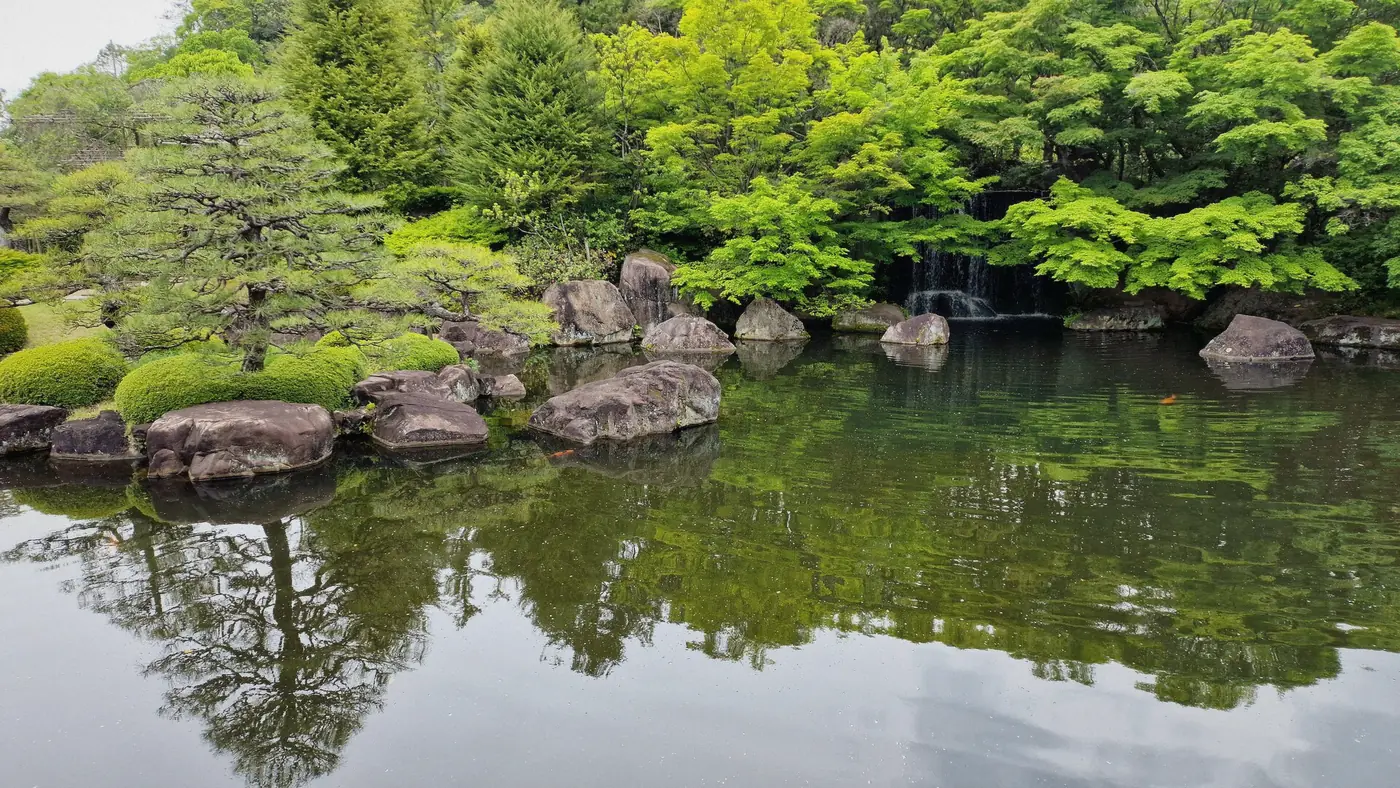
Koko-en at midday - benches, water and the teahouse: the day's rest stop. Photo: Anagoria, CC BY-SA 4.0, via Wikimedia Commons.
Afternoon: Sake District or Kobe
Two honest options
The sake option: the brewery lanes west of the castle quarter - Himeji has quietly serious brewing heritage, with museum-stop tastings (a few hundred yen a cup), the Yujido Seishu-kan shopfront, and streets of cedar-ball-marked kura. Walkable from the garden, done in ninety relaxed minutes. The Kobe option: the shinkansen from Himeji station (15 minutes, about 1,890 yen) to a harbour afternoon - Chinatown, Harbourland, the beef lunch the whole prefecture advertises.
The sake option keeps the day on foot and on theme; the Kobe option converts Himeji into a two-city day. Choose by weather (Kobe's harbour in rain is poor) and by train appetite.
The version a guide sells
This whole day - castle, garden, town, transit - is what the Himeji-based listings compress into a booked product: the culture walk covers castle-plus-garden-plus-old-town in four guided hours, and the three-city loop is the Kobe variant with the driving done. The independent version above costs ticket money only; the guided versions buy interpretation and a clock you do not hold.
Evening: Back to the Base
The return arithmetic
The 16:00-17:00 shinkansen wave returns Kyoto or Osaka by early evening - the direct Nozomi/Sakura services run frequently and unreserved seats are plentiful off-peak. Special-rapid riders should aim an hour earlier; the line thickens with commuters after 17:30. Two closing options before boarding: the station's ekisoba counter for a second bowl, and - in the darker months - the keep's evening light-up, visible from the station square at no cost, which is the exact postcard the whole day walked toward.
Rainy-Day and Summer Variants
Two adjusted clocks
Rain: the route runs - the keep is indoor, the garden is arguably better wet - but the sake district's charm halves, so swap the afternoon for Kobe's indoor harbour mall, and the boulevard walk for the loop bus. Summer heat: enter at 9:00 sharp (the keep is a kiln by 11:00), lengthen the garden-and-teahouse midday, and take the Kobe variant for its sea breeze; carry water from the station, and the official site's own hot-season notice is worth a read the night before. In both variants the two-month-out booking advice for bloom weeks does not apply - but the 24-hour cancellation window on every listing is the rain-decision's friend.
The Day in Motion
An independent video of the Himeji-and-beyond day - the itinerary above, filmed.
The Station Half-Hour, Done Right
Lockers, maps, and the last calm coffee
The day's first half-hour happens in the station: lockers for anything bigger than a daypack (the concourse's coin lockers fill by 10:00 on weekends), the tourist information desk's English map - which the boulevard's signage assumes you carry - and breakfast from the bakery counters or a proper coffee at the station's kissaten, because the castle quarter's cafes open for lunch. The Loople board is signposted from the north exit if the weather argues against the walk. Leave the station at 08:35 and you reach Otemon as the gates' staff do.
The budget ledger
The independent day from Osaka lands around 7,000-10,000 yen all-in; adding the licensed pick as the guided core roughly doubles it and removes every decision before noon. Both are honest shapes; the ledger exists so the choice is about value received, not surprise.
| Line | Independent day | With a guided core |
|---|---|---|
| Transport from Osaka | 1,530-3,220 yen each way | Same train, or included pickup |
| Castle + garden | 2,600 yen combo | Included in the tour |
| Licensed guide | - | $62-$107 per person |
| Lunch + teahouse | 1,500-3,000 yen | Your own cost either way |
| Lockers + bus margin | ~600 yen | ~600 yen |
Lunch: The Decision Tree
Four branches, all honest
- Ekisoba at the station (rain, or loyalty): the 1949 original battered soba, minutes from your bags.
- Castle-quarter taverns two blocks off Otemon-dori (the default): proper teishoku lunches at street prices, beer optional.
- The sake district's brewery counters (if the afternoon goes west): tasting flights with the lunch set.
- Picnic from the third-bailey kiosks (bloom weeks only): the local custom, and the only option that requires no queue at all.
The afternoon, budgeted by energy
The sake district costs nothing but an afternoon and a few tasting tickets; Kobe costs the shinkansen hop and a beef-lunch premium. The honest third option - a second, slow pass through the garden with a book - is the one reviews never mention and locals choose most. Energy, not itinerary, should pick; the return trains run all evening.
The Two-Day Variant: Mt Shosha and the West
If Himeji earns a second day
The castle fills one; the mountain fills the next. Mt Shosha's Engyo-ji temple complex - a ropeway ride west of the station, its halls threaded through a primeval-looking forest and famous from film - is the region's second sight and the reason the city deserves an overnight rather than a rush. Add the castle's evening light-up from the station square, a sake-district dinner, and a station-side hotel, and the two-day shape beats two rushed day trips.
Travellers preferring the sea run the Harima coast instead; either way, the ticket decision stays the same - one admission, one garden ticket, and a guide only if the stairs' stories are the point.
Weather Calls: Rebooking the Day in Real Time
The 07:00 decision tree
Rain in the forecast reshuffles the skeleton rather than cancelling it: the keep and garden run wet, the sake district halves, Kobe's harbour sins in drizzle - so a rain morning swaps the afternoon to the station's ekisoba-and-museum shape or the Kobe harbour mall, and keeps the castle core untouched. Heat re-times rather than re-shapes: enter at 09:00, extend the teahouse, walk the town after 16:00. The bookings that make both calls cheap are the ones with 24-hour cancellation - which is every guided listing in the comparison - and the official online ticket, whose date-change terms cover the rest.
The one unwise move is deciding at the gate in the rain; decide at breakfast, where the umbrella still counts as a plan.
Two Worked Days: The Straight Six and the Long Loop
The same skeleton, two widths
The straight six: a 08:00 special rapid from Osaka, castle at 09:00, garden by noon, ekisoba, sake district amble, 16:30 train - six hours on the ground, home for dinner, every ticket bought on the official route. The long loop: shinkansen out at 07:30, guided morning with both admissions, Kobe by 13:30 for the harbour and a late beef set, Nara declared a separate trip, home at 19:00 tired and triumphant. Both are the skeleton with different muscles; the itinerary's job was never to pick for you but to keep either day honest about the 16:00 clock and the walking budget.
What travellers report forgetting
- The shoe bag - the castle's own ask, sold at the station for pocket change, forgotten by everyone once.
- Sunscreen in the exposed months - the baileys are gravelled sun traps; the heat rows explain the midday rule.
- Cash for the teahouse and the tastings - two card-free stops on an otherwise card-friendly day.
- The 16:00 last entry - the single most common itinerary-crusher; the skeleton puts the garden first for a reason.
- A spare morning: every weather call in this guide is cheaper to make when one exists.
The Photo Ledger for the Day
Nine frames that tell the whole story
- 07:40 - the keep down the boulevard, morning emptiness, station behind.
- 09:05 - the third bailey gate frame before the wave arrives.
- 10:30 - the rooftop balcony's roofscape and sea.
- 11:15 - the stone curve of the base from below (the musha-gaeshi shot).
- 12:00 - the garden's pond with the keep over the pines.
- 13:00 - teahouse matcha, the day's only seated frame.
- 14:30 - the sake district's cedar balls (sugidama) against whitewash.
- 16:00 - the moat from Sakuramon Bridge, petals or leaves by season.
- Dusk - the light-up from the station square, free, the day's full stop.
Camera policy inside the keep
Photography is permitted throughout the interior - no flash, no tripods on the staircases - and the interior light rewards steady phones over gear. The balcony is the keeper frame; the staircases are for holding the rail. That is the whole policy, and it matches what the guides on every listing tell their groups.
The Castle Quarter's Second Layer, If the Legs Hold
Four stops the skeleton skips
For the day with an hour to spare between the garden and the trains: the Himeji City Museum of Literature (a Tadao Ando concrete piece on the garden's edge - a quarter-hour of quiet), the Otemon-dori's clock-tower arcade for the shopping-street Japan the castle quarter hides, the Hyogo prefectural history museum's castle-model floor when open, and the old Akashi-gawa riverside walk that stages the keep across water at dusk. None needs a ticket beyond pocket change; all four belong to the evening chapter when the train's an hour later than planned - which, on a good Himeji day, it deserves to be.
Souvenirs, ranked by honesty
- Ekisoba packet kits - the day's lunch, portable and real.
- Sake from the district's breweries - the walk's theme, bottled.
- The castle's shachihoko-motif everything - the roof tiles' story, souvenir-grade.
- Matcha and sweets from the teahouse counter - the garden hour's echo.
- Everything printed with the castle that is not any of the above - available in every airport in Japan; buy it there if you must.
Group Logistics: Doing the Day as Four or More
The coordination points that break groups
Parties of four-plus break at three joints, and the skeleton can be pre-armed at each. The keep stairs: the one-way flow separates groups who climb at different speeds - set the reunion at the keep exit's bench, not 'at the top'. Lunch: the castle quarter's taverns seat parties of six at a squeeze - pick the 12:15 window or split the decision tree branches by appetite.
And the afternoon fork (sake vs Kobe): a group that splits should exchange train times, not vague plans - the return rhythm runs hourly and nobody enjoys the station wait. Families doing the guided core instead inherit the guide's logistics, which is half of what the per-person price buys.
The rest-day question, answered honestly
Himeji is a walk-first city day - roughly four to six kilometres across the skeleton's full shape - and travellers arriving on tired legs from a Kansai marathon should cut, not compress: keep plus garden is the day's irreducible core (the straight-six minus the afternoon), the Loople bus removes the boulevards, and the sake district waits for the return trip. The castle's stairs forgive nothing, but everything around them is negotiable - the honest itinerary is the one your calves signed off on.
What a Guide Would Have Added, Itemised
The honest invoice for independence
Run the independent skeleton and the guide-less day leaves four things on the table: the defence architecture's running commentary (the route's hardest self-taught part), the queue's narrative filler, the garden's social-history translation, and the sake district's doors - the breweries' best conversations open to introductions. That is the real product the comparison's per-person prices buy, itemised; the traveller who prices those four items honestly either books one of the walking formats or walks the day happily ignorant of what the walls were saying - both are legitimate, and now the choice is informed rather than default.
One-Day Itinerary: Frequently Asked Questions
How many hours do you need for Himeji Castle and the garden?
About 3-3.5 hours on site: 1.5-2 for the keep route, 45-60 for Koko-en, plus the walk between. Add the station walk each way and lunch, and a comfortable Himeji day runs 6-8 hours door to door from Osaka or Kyoto.
What order should I visit Himeji Castle and Koko-en?
Castle first, garden second: the keep needs morning legs and beats the mid-morning queue at opening, while the garden is the natural rest half. The reverse order wastes the garden's calm on pre-climb nerves and lands you in the worst queue of the day.
Is one day in Himeji enough?
For the castle, the garden and the old town at honest depth: yes, comfortably - this itinerary fills a day without hurrying. A second day only earns its keep for Mt Shosha's mountain temple complex or the western Harima coast, neither of which the average castle itinerary needs.
Can you visit Himeji Castle and Kobe in one day?
Yes - the shinkansen between them is 15 minutes, and the three-city loop tours do Himeji, Kobe and Nara in eleven hours. Independently, castle-and-garden in the morning, Kobe's harbour for a late beef lunch, home by dinner is a real and popular shape.
What should I eat in Himeji for lunch?
Ekisoba - Himeji's station-origin battered soba, a local institution since 1949 - is the classic; the castle quarter's lanes add proper taverns and the sake district's lunch counters. Budget the teahouse in Koko-en for matcha and sweets as the mid-morning or midday stop.